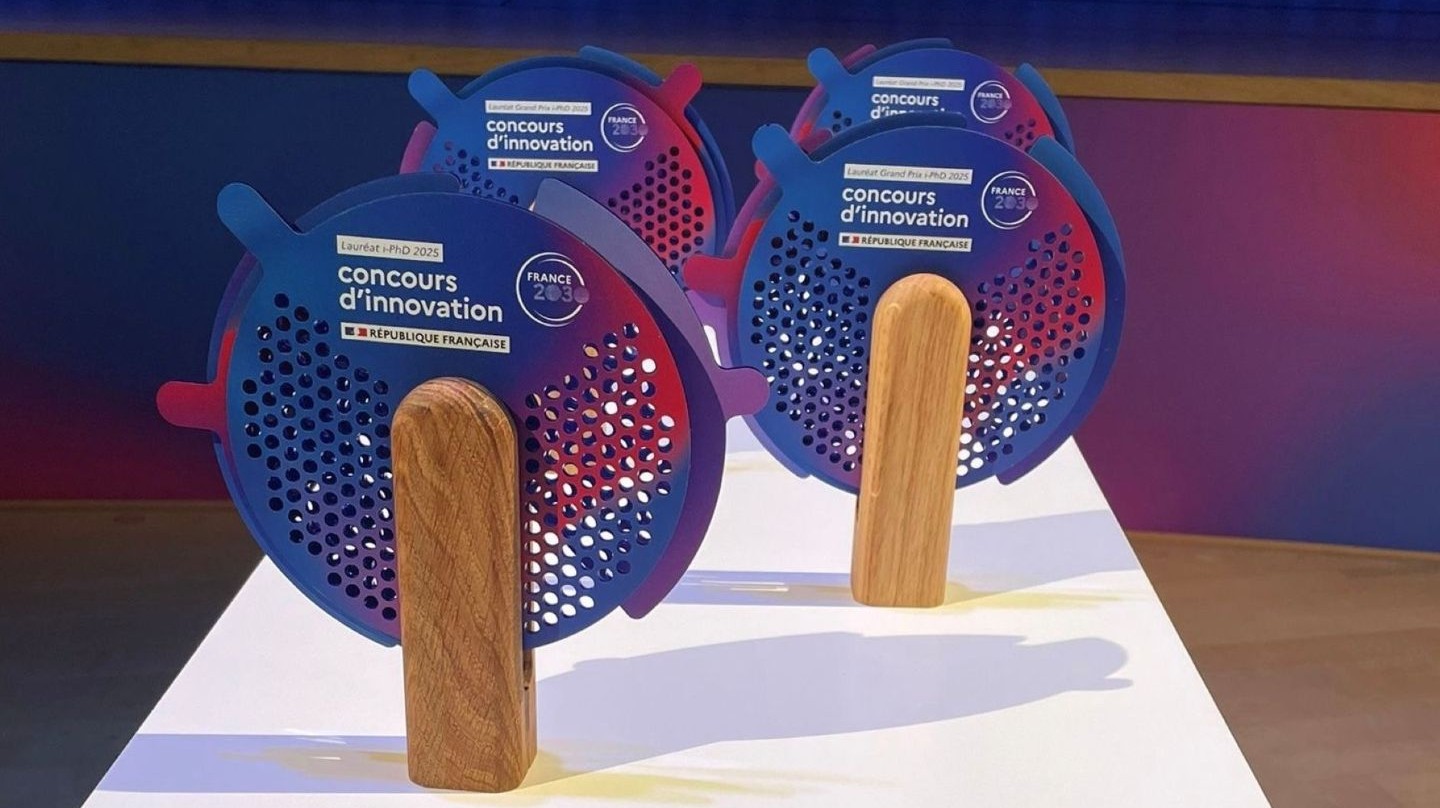
Smarter, safer, and more sustainable batteries: at INSA Strasbourg and the ICube laboratory, research is being shaped in partnership with the industry. From the hybridization of batteries and supercapacitors—the focus of the OptHySource project, which won an award at the 2022 national i-PhD competition—to the digital battery passport initiative led by Cyrine Soufi in 2025, and the use of artificial intelligence to detect overheating risks early (a project by Slimane Arbaoui recognized in the 2026 "Mature your PhD" challenge), these efforts all share a single ambition: to translate scientific breakthroughs into concrete solutions. Supported by technology transfer mechanisms through SATT Conectus, a CIFRE partnership with EDF R&D, and an industrial chair with Eiffage, this dynamic bridges the gap between academic research and industrial requirements, helping to drive the evolution of battery technology and electric mobility.
Research only matters if it reaches industry. At INSA Strasbourg and the ICube laboratory (CNRS UMR 7357), our research activities aim to turn advances in battery technologies, artificial intelligence and energy management into practical solutions for industry and society.
As a researcher at INSA Strasbourg and ICube, I lead the System Integration research axis within the EM3 team and head the electrical engineering research team at INSA Strasbourg. My work focuses on smart batteries, hybrid energy storage, AI-based battery monitoring, digital twins and battery lifecycle management. A key objective is to connect scientific research with industrial needs through collaborative projects, technology transfer and the development of innovative solutions.
From hybrid energy storage to smart batteries
Our technology-transfer activities build on several years of research into battery–supercapacitor hybridization, energy management and battery lifetime. The OptHySource project explored how hybrid energy storage systems could improve performance and reduce the demanding operating conditions imposed on batteries in electric vehicles. Supported by SATT Conectus, the project benefited from technology-maturation activities, including market assessment and the development of a demonstrator for industrial applications. Its innovation potential was also recognised through the national i-PhD Innovation Award in 2022, awarded to Théophile Paul, who developed the project during his doctoral research.
Our collaborations have since expanded towards AI-based battery diagnostics, predictive monitoring and digital solutions for battery lifecycle management. These activities include technology-transfer programmes with SATT Conectus, a CIFRE partnership with EDF R&D, and an industrial chair with Eiffage. Together, these partnerships help bring research closer to industrial constraints and support the development and validation of solutions with practical applications.
Recognising the next generation of battery innovations
The achievements of our doctoral researchers illustrate this approach.
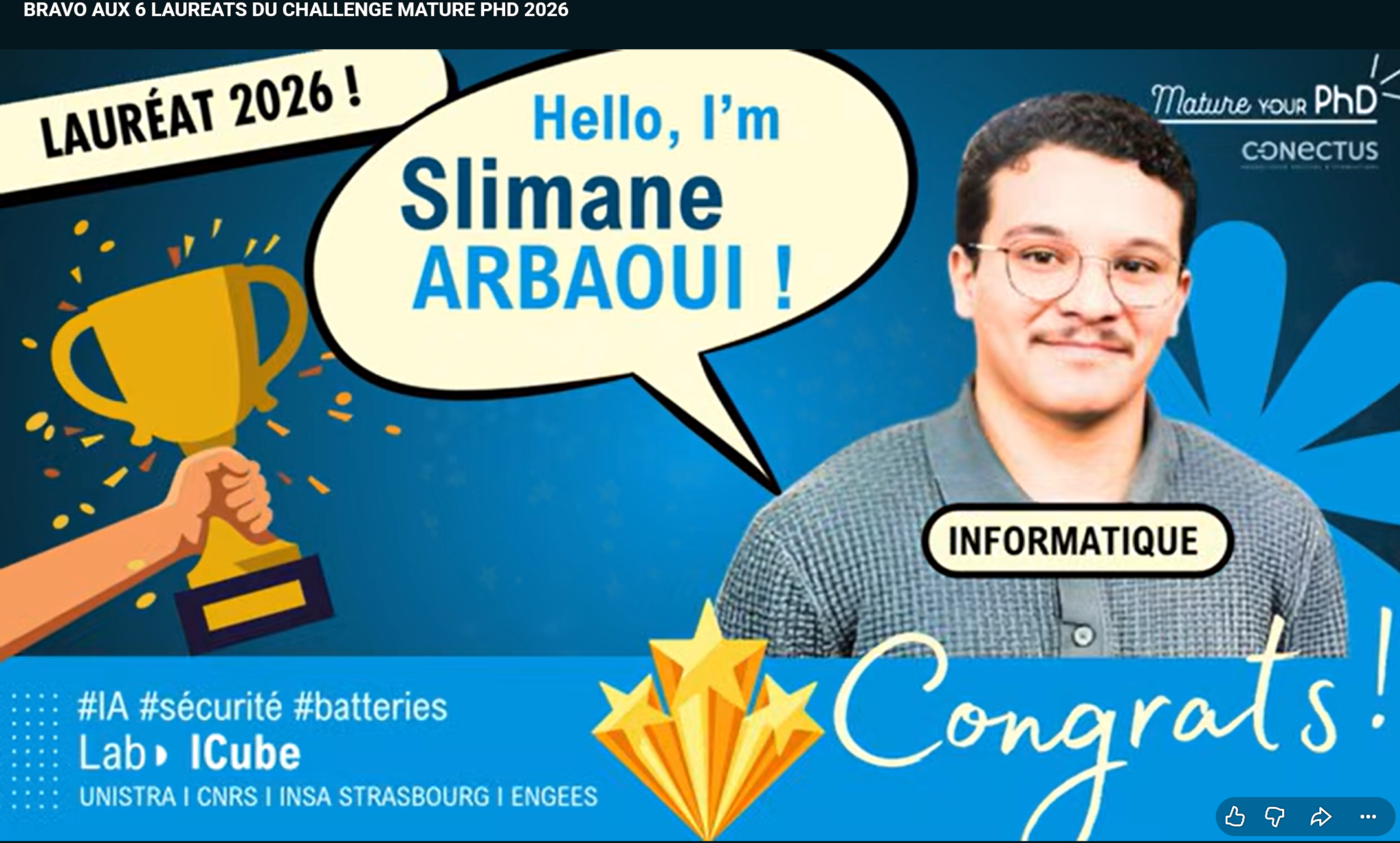
In 2025, Cyrine Soufi was recognised by the Mature your PhD challenge for work related to the digital battery passport. This research addresses the need for reliable information on battery performance, environmental impact and lifecycle management, supporting more transparent and sustainable battery value chains.
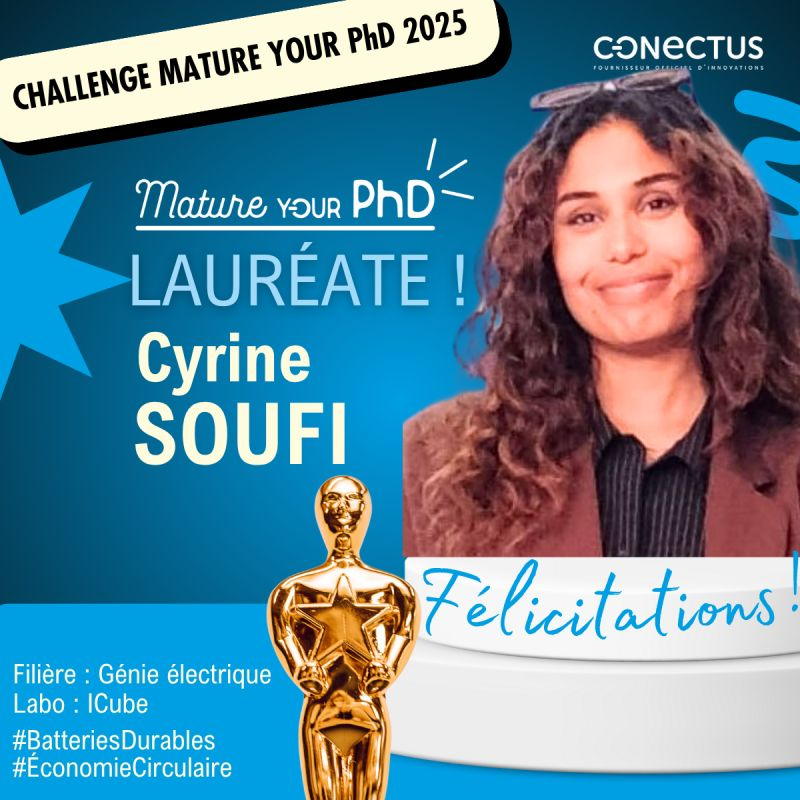
In 2026, Slimane Arbaoui, from ICube, was selected as a laureate of the Mature your PhD challenge for a project focused on using artificial intelligence to detect battery overheating risks at an earlier stage. His work illustrates how AI can contribute to battery safety by identifying anomalies and helping anticipate potentially hazardous operating conditions.
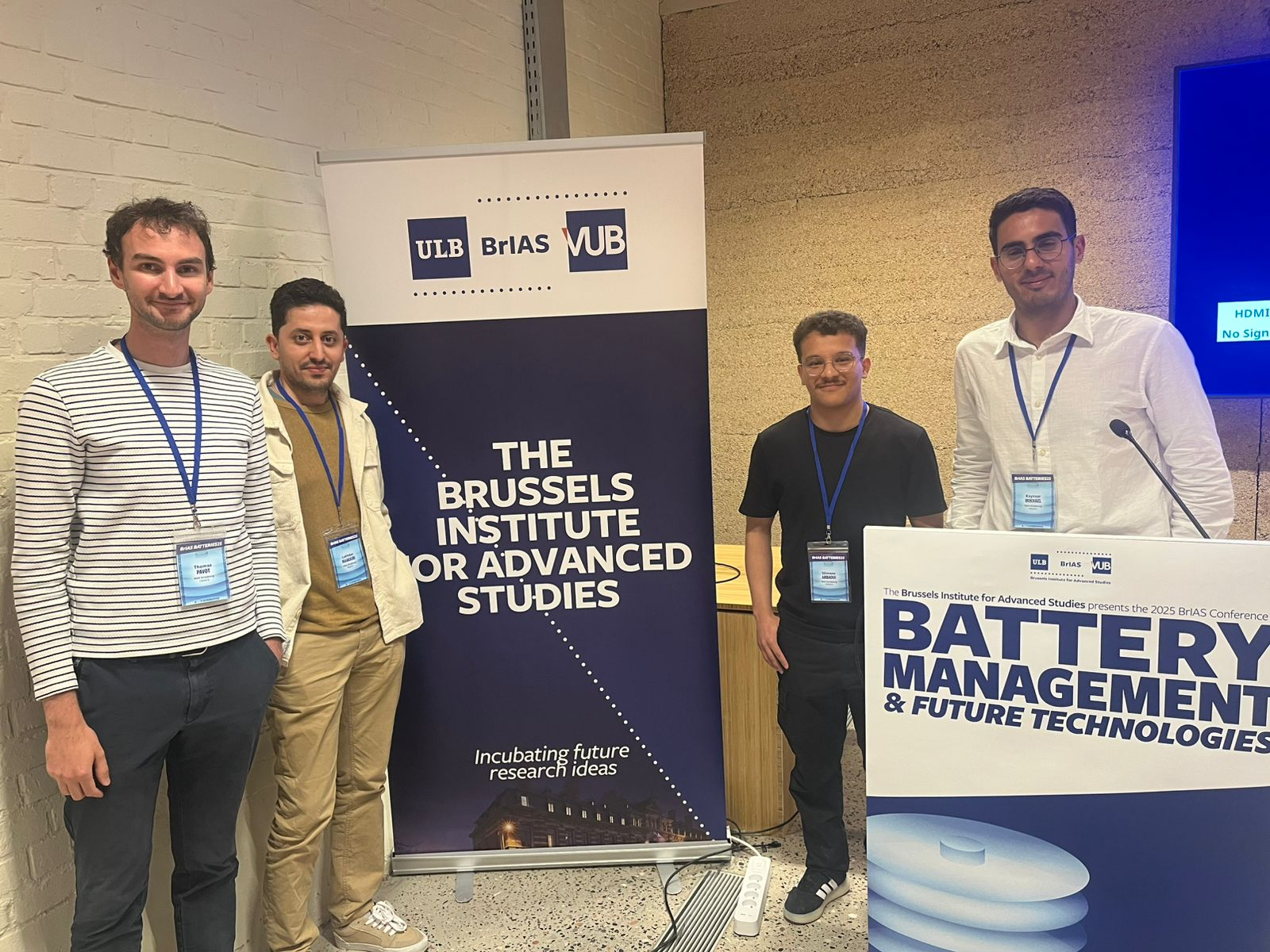
These achievements reflect a broader research strategy: combining modelling, experimental testing, AI and digital technologies to address major challenges in battery performance, safety and sustainability.
Building stronger links between research and industry
At INSA Strasbourg and ICube, technology transfer is an integral part of our research activities. Through European research projects, industrial partnerships, technology-maturation programmes and doctoral innovation initiatives, we work to ensure that scientific results can progress towards demonstrators, industrial applications and, where appropriate, new business opportunities.
Our objective is clear: to develop smarter, safer and more sustainable battery systems by connecting scientific advances with real industrial needs.
https://www.conectus.fr/6-nouveaux-laureats-primes-au-challenge-mature-phd-2026